Some memoirs by Frank Wilson
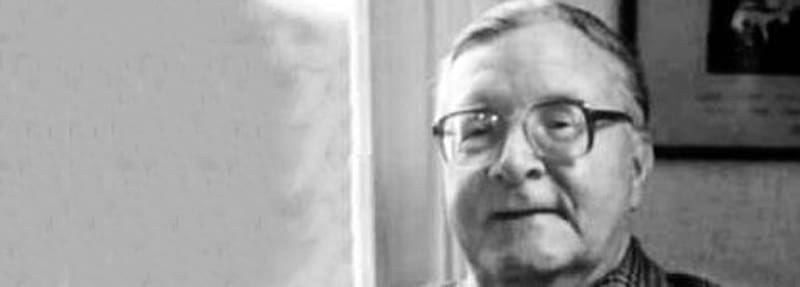
My name is Frank Wilson, and I was born on the 12th of November 1936. I was the seventh child of Emma and William Wilson. I had two older brothers Bill and Edwin and three elder sisters Connie Ada and Jean; my elder sister Joan died in infancy.
My earliest memories include sleeping in an air raid shelter because of proximity of the Stanton Ironworks. I was born at 85 Crompton Street but in 1939 we moved to 110 Crompton Street, known locally as Frog Row because the houses had cellars which were damp and there was an abundance of frogs.
On the 31st of May 1941 tragedy struck the family when my father died. My youngest brother Peter was born on the 10th of November 1939, so he was only a year old when my dad died and I was only four years old. My dad was badly wounded in the First World War when a bullet passed through his forearm and his upper arm when he was carrying his rifle. He was also gassed and was invalided out of the Sherwood Foresters in May 1915. He died on Saturday and the doctor who came to see him complained that he had been fetched out to see a dead body. The local policeman was Bobby Jess who was with my mother comforting her – apparently he was very angry with the doctor and said, “He’s not dead until you say so – now apologise to Mrs Wilson”.
The local Parson was Rev. Cox, who did not come to see my mother until a week after my dad’s death – his excuse was he’d been busy with the Whit Sunday services. To me as a young lad he was evil personified. He was tall and gaunt and always dressed in black, black gown, shirt, trousers and shoes. He always frightened me as a child, not the ideal for a man of God. Rev Cox was also the Stanton youth employment officer. This meant that unless you were a regular churchgoer you didn’t stand a chance of getting a good job – as I say he was an evil man. There were certain Crompton Street families who shall remain nameless who benefited from this arrangement; fortunately, by the time I left secondary school Stanton had its own training centre and a superb training program. I also got the job I wanted as a maintenance fitter. I left Gladstone School when I was 15 years old to get on the engineering course. I started three nights a week at night school when I was 14 years old. At Gladstone School we had a super range of teachers with John Lally and Herbert Thompson who were outstanding. I’ve always had an appreciation of art and music because of these great teachers.
My mother Emma was born in a cottage at the bottom of Main Street in Newthorpe in 1897. She was the eldest of six children and at 12 years old, she had to leave school (Beauvale on Dovecote Road) and go into service at Beauvale Manor Farm opposite Beauvale priory because her parents could not afford to keep her and they needed an income from her. She had to cook meals for the farm labourers, having to get up at 5 o’clock in the morning to light the fires. When she was just 18, she got another service job at the Seven Oaks at Stanton Ironworks and that is where she met my dad. They were married in 1919. My mother was also the local midwife on Crompton Street and numerous kids called my mum Aunty Pip or later grandma Pip. I can remember early on one morning small pebbles being thrown at my window, it was Jean Reeby, a near neighbour – she said “tell your mum that Marion’s waters have broken”. Being totally naive in pregnancy terms, I said “you want a Plumber not my mother”. I was pushed to one side by my mum saying “get out of the way you daft beggar”.
My dad was born in Halam near Southwell in 1880. When Stanton Ironworks were offering houses on Crompton Street for the workers, my grandad walked from Halam to Stanton, got a job and a house and brought his family to live on Crompton Street. As I stated earlier, my Mum and Dad met at the Seven Oaks and got married. Although his right arm was paralysed, my dad got a job as a crane driver at Nutbrook Spun Plant. The crane controls were at ground level, so no climbing was involved. He worked at Stanton for 44 years.
I was called up for my national service in December 1957. Before my call-up I was working on a crane track with a bricklayer named Alf Huckle; he was laying the bricks, and I was doing the steel work. On a tea break I told Alf that I had received my call-up papers but I was worried about my mum’s finances as only Peter was at home. He was an apprentice blacksmith on very low pay at only 18 years old. Alf said he knew my dad and that my mum will get his pension. I told him my mother didn’t get a pension, with that he said come with me and he stood up and walked from Nutbrook to Erewash Foundry to see Bill Fisher, who was a Works committee official, when we got there, he said “tell Bill what you told me” which I did. Bill didn’t believe me either as he also had known my dad and the years he had served, Bill had his own telephone, and he immediately rang the pensions office for them to see my mother the next day. The outcome was that somehow my dad had slipped through the net and no pension had ever been paid in 16 years. Stanton paid some back pay as compensation; they also paid Mum double pension. My mother had the last laugh because she lived for another 30 years on that double pension, all thanks to Alf Huckle and Bill Fisher.
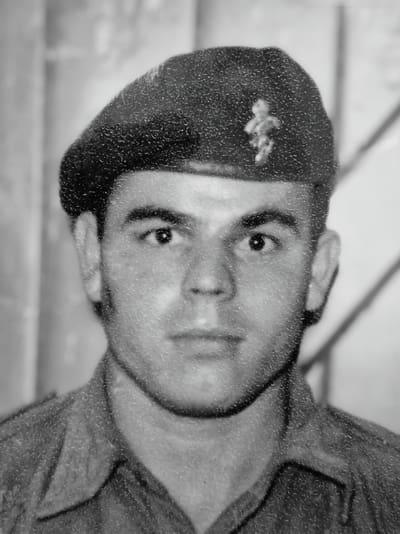
So I went off to do my national service a very happy bunny. On December 5 I joined the Royal Electrical and Mechanical Engineers as a craftsman. I did my basic training at Honiton in Devon and when we were issued with our kit, I realised that for the first time in my life I had three of everything, three shirts, three under clothes, trousers and boots; how sad was that? I did my trade training at Borden in Hampshire, at the start of the course which was to be a gun fitter on heavy anti-aircraft guns, we were told that the top of the course had the pick of the postings, which cascaded down to the bottom of the course, who had what was left. I studied hard and was fortunate enough to come top of the class; the course lasted six months. There were approximately 40 fitters on that course.
I wanted to go abroad because prior to going into the army I had only gone to Skegness and that was on a day trip, so I chose the 37th Heavy Anti-aircraft Regiment Royal Artillery based in Malta. This is when a series of coincidences occurred. My brother Edwin had been in the Royal Artillery and had been demobbed whilst I was doing my trade training. Edwin was directly involved in me losing my two top front teeth, both milk teeth and adult teeth. When I was a child apparently I was a plaything for my two elder brothers and at the back of Crompton Street was a raised manhole standing about 3 feet high. My brothers used to throw me over the manhole but one day they dropped me, my teeth were driven up under my nose and I had to go to Nottingham General Hospital to have them removed. I was always self-conscious of smiling as a kid and when my adult teeth appeared approximately 10 years later they were distorted and pitted so I was still self-conscious of smiling.
We arrived at 37 HAARA who were based at TIGNE barracks in SLIEMA in August in a heat wave with temperatures over 100°F and as we were dressed in full kit and winter battle dress, I thought I would melt. The first coincidence occurred when we were booking in at the guard room, we had only been there a few minutes when I heard someone shout ‘TUG’. In the military all Wilsons are known as “Tug” after Admiral Wilson who first used tugs to move ships in and out of harbours. I thought “there is nobody here that knows me”, and then an artillery sergeant came up to me and said “what are you doing here in the REME?” I realised he thought I was Edwin because we did look very similar. I said I was his brother; he asked me what my trade was and I told him I was a gun fitter. Apparently, there were approximately six Sergeants in the regiment who knew Edwin. The regiment consisted of three batteries 10 battery, 111 battery who were based in the main barracks at TIGNE and 171 battery who were based up on the island at a remote place called GJAGN TUFFIER which was quite remote, that is if you can get remote on such a small island. When news got around that Tug’s brother had joined a sergeant called Mick Collins came from 171 Battery to claim me, as his gun fitter had just been demobbed. Mick had served in Germany with Edwin, in the light aid detachment or commonly known as LAD, we had no bull like the main barracks, you just did the job you had been trained for.
The second coincidence occurred when I had been at TIGNE barracks for a few days. The barracks was on a peninsula surrounded by the sea. Because of the heat wave we worked 7 am to 2 pm which meant there was plenty of time for swimming. I got an ear infection through diving too deep. I was reported to the medical Centre and once there I recognised a man that I had worked with at Stanton. He was Fred Wilson – there getting his medical prior to being demobbed. I was gobsmacked; there are two F Wilson’s who knew each other in the same room 1500 miles from home! Fred’s great uncle was killed when a bomb hit Saint Bartholomew’s church at the top of Crompton Street in 1916, Fred is shown unveiling the plaque on the church with Stephen Flinders on an Ilkeston Local History Society photo. Fred had hitchhiked home when he was demobbed and the commanding officer was so impressed that he offered three weeks’ extra leave to anybody doing the same journey.
I have mentioned that Edwin was responsible for me losing my front teeth as a child, and also my adult teeth were lost because Edwin was a regimental boxing champion when he was in the army. I was put forward as a boxer, although I told the Sergeant that I had never boxed before in my life. He said “don’t worry it’s in the genes”. He said “as your brother was so good, he always fought two weights above, so we have done the same thing with you”.
I was 5 foot 8 tall and only 10 stone 6 lb., and I was fighting light heavyweight at 6 foot tall and 12 stone 7. I got a right good hiding and took a blow to my mouth that loosened my teeth, I finished up in a naval hospital in Valletta where the teeth were extracted, thank you again Edwin.
Although I had worked on the 3.7-inch guns for over a year, I had never actually heard one fire until I went to a firing camp in Malta. I was getting my midday meal on a tray when the gun went off, needless to say the tray went up in the air and my royal artillery lads cheering on a very embarrassed REME fitter trying to rescue his dinner. After the firing camp, the regiment was flown to Libya for desert training. Although I had been on Malta for nearly a year and thought I would be a acclimatised to the heat it was still a shock to be in the desert, from freezing at night to be in 130°F in the day took some getting used to; goodness knows how the lads in the second world war fought in that heat – we were there for a month and glad to get back to Malta.
On the return to England, we returned on the troopship Devonshire and were stationed at Blandford Forum in Dorset. I was demobbed on the 3rd of December 1959, having served two years in the colours. I was 23 years old and I stood on Ilkeston Market absolutely penniless with just enough money for my bus fare to Hallam Fields, but ready for my next lifetime adventure.