Article taken from Stanton and Staveley News, February 1967
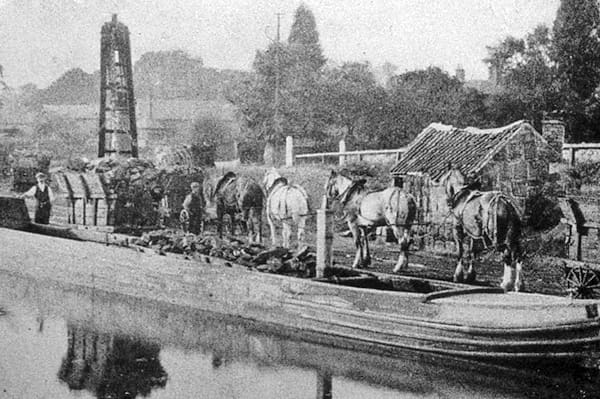
“Some people call them barges, but this isn’t true. Barges, you see, are bigger vessels which will carry between 80 and 100 tons, whereas a canal boat – that’s what I lived on for over 40 years – will only take 60 tons at the most.”
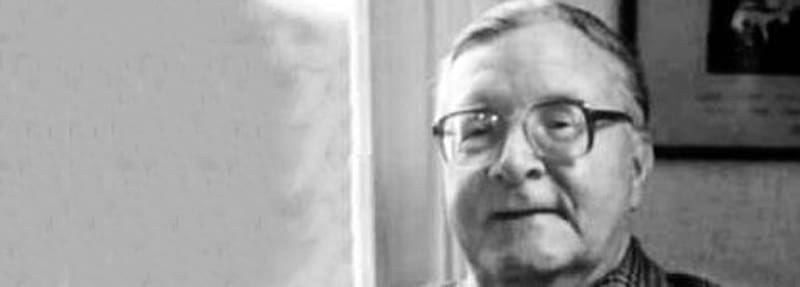
This was Charles Doughty speaking. He was talking about his life afloat before he and his wife Alice “dropped anchor” in 1946 to carve themselves a new life on dry land.
Today, practically the whole of his family work at Stanton – Charles himself in the building department, Charles Junior in the New Works Furnaces, Alice in the Erewash Valley Foundry Canteen, and his sons Joe and Albert at the New Works Foundry. Daughter Margaret was also at the New Works Foundry before she became a full-time housewife.
Like generations of Doughtys before him, Charles was born on the waterways. When he married, he chose a girl who lived on a canal boat, and after the children came along the family lived quite comfortably aboard his two craft, in cabins measuring only 13 feet long by 6 feet across.
The history of Charles and his family is in a way a sad one, for it runs parallel with the declining years of waterway transportation. When Charles was a boy, he little thought that he would one day live ashore. All his relations lived on canal boats, so did all his friends. It was the only world he knew; the stationary world beyond the canal bank was no more than a passing scene.
Charles Doughty never went to school, but he had much to learn to enable him to take charge of a boat himself one day. He did not regret his lack of education, in fact the “landlubbers” he occasionally spoke to told him how lucky he was, but he did find it a disadvantage when he began courting Alice. Love letters had to be dictated to his father, and it was his father who then read him Alice’s replies.
Meetings were few as the couple saw each other only when the boats were in the same area. One night when they were reluctant to part, Charles’s father leapt from his bed, saying “If you got energy to talk, you’ve strength to work. Start the motors, we’re leaving right away”. Travelling by night was becoming more general at that time in the early 1930s, mainly because motors were fast taking over from horses as a means of driving power. In a way this was also a blessing, for it meant the “boaty” no longer had to lead his horse over long distances or to lie on his back as he propelled a 60-ton boat through a tunnel by pushing on the tunnel roof with his feet.
But it often meant too, that he was tempted to complete each journey non-stop -so that a nine-day trip from Birmingham to London, for example, would be reduced to four days with the help of the motor. In 1934, Charles and Alice were married. When they had children, they kept them amused by giving them work to do. Even so, Charles would occasionally have to dive in the canal to rescue one of his youngsters.
Alice, of course, had to work hard to look after the family in the confined space of a boat, but as one of twelve children herself, she took it in her stride. And like her husband, she was capable of diving into the water if the need arose.
Charles records with pride that once when the Trent was in flood, he and Alice were aboard a boat pulling a second boat when the tow rope snapped. Despite the obvious danger Alice plunged into the icy water and tied the two ends of the rope together and saved the second boat and its valuable load.
Charles began working for Stanton in 1941 when he took charge of two of the Company’s twelve boats. During the war he often transported pipes to London, usually leaving his family at Woolwich whilst he completed the remainder of the journey on the Thames. He had many nervous moments on these trips: many of his friends were killed by enemy action along that stretch of water.
In 1946 he decided to seek a job on the Works. He saw that the days of the canals were numbered and besides, there was the education of his children to consider. He did not wish them to grow up as he had done, being unable to read or write. When he talks of the canals today, Charles has said that instead of being exploited to the full, they are then neglected or filled in. It’s perhaps ironic that he should work for a Company which supplies pipes – some of them used for draining the waterways he lived on for so long.
Of his years on the canal boats, he says “I had a hard life and there was not much money. But it was a nice life and a healthy one and I still miss it a good deal”.
Transcribed by Beverley Kilby